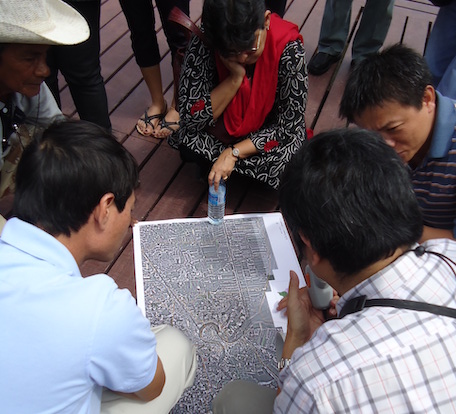
The Cities at Risk initiative advanced understanding of the effects of climate change in the context of rapid urban growth in South and Southeast Asia and Africa. The program encouraged coordinated action among scientists, policymakers and the public, and the integration of scientific information about vulnerabilities, impacts and adaptation into planning and policy.
Under this initiative START convened international conferences, organized intensive training institutes and supported city-specific research, communications and outreach activities, engaging individuals from more than 30 cities in Asia and Africa.
Cities at Risk Workshops included:
-
- Cities at Risk I and II (Bangkok, Thailand, 2009; and Taipei, Taiwan, 2011)
Urban planners and officials came together with representatives of disaster management and development agencies to review scientific findings and projections regarding climate-related risks (including sea level rise, extreme climate events, intensification of storms and storm surges) for Asia’s coastal megacities. - Cities at Risk – Africa Workshop (Durban, South Africa, 2013)
Municipal representatives and participants from universities and research centers assessed the state of knowledge and identified capacity needs regarding climate change vulnerability and risk in cities. They shared insights and experiences on pathways for effective climate change adaptation and resilience in African cities and urban systems. - Integration of Social Vulnerability into Robust Decision Making I and II (Ho Chi Minh City, Vietnam, 2013; and Shanghai, China, 2014)
These meetings aimed to integrate social vulnerability considerations into the cities’ decision-making and policy processes. Participants generated a list of measures of social vulnerability, potential policy interventions, and uncertainties to consider.
- Cities at Risk I and II (Bangkok, Thailand, 2009; and Taipei, Taiwan, 2011)
Cities at Risk projects included:
-
- Planning Integrated Coastal Adaptation Strategies for North Jakarta (PICAS)
Between 2012 and 2013, the PICAS project designed and facilitated a collaborative process for integrating previous recommendations on climate-related risk and disasters in Jakarta; assessing the priorities, feedback, and additional ideas of at-risk populations; and leading the development of a risk management and adaptation action plan for selected study sites in the city. - Building Adaptive Capacity for Managing Climate Change on Coastal Megacities
START International and the Southeast Asia Regional Center (SEA-START) supported capacity building for the Coastal Cities at Risk (CCaR) project, a five-year effort (2011-2016) aimed at enhancing the capacity of mega-cities in Southeast Asia, West Africa, and Canada to successfully adapt to and cope with risks posed by the effects of climate change in the context of urban growth and development.
- Planning Integrated Coastal Adaptation Strategies for North Jakarta (PICAS)